

Autodesk Fusion Blog: How We Think About Tools
Glass is brittle and stiff — drop a wine glass and it shatters. But anyone who has worked with hot glass knows something else is also true: heated, it stretches like honey. It flows, it bends, it yields. My work starts from that second truth and engineers it to perform at architectural scale.
Mangrove — a glass sculpture eight stories high, recently installed at Solaire Resort North in Manila — is built on this principle. The piece is not rigid. It is flexible, a kind of giant textile system, and that flexibility is the point — not a workaround, but the solution.
The problem we kept running into, as we tried to scale up from pieces the size of cars to pieces the size of trees, was that stiffness becomes the enemy. Elements that large, held rigid, are prone to fail catastrophically. So we went in the other direction: rather than fighting for rigidity, we designed in flexibility. Smaller elements that can shift relative to one another, conceived as part of a coherent whole. The analogy I keep coming back to is a sushi mat — made entirely of individual sticks of bamboo, yet when you look at it, you see one thing. It has flexibility and integrity at the same time. That approach has become fundamental to how we work.
Autodesk recently featured the studio in a piece about how we used Fusion 360 throughout the Mangrove project. It is framed as a case study, but what it actually captures is something we think about more broadly: technology as an integral part of how we design and build, not a layer on top of the process.
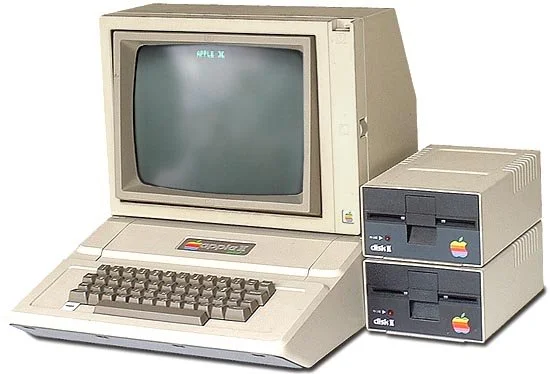
We have been early adopters since the beginning. In 1978, when I was ten, I had an Apple II. It couldn't do much. But it was new, and that was enough.
My first big commission arrived in an unexpected way. In 1997, Frank Gehry handed us a model of a building he was designing in CATIA — a software suite so specialized it was barely a commercial product; outside of aerospace and the military, almost no one had a license. We certainly were not going to get one. But Rhino had just come out, and it was the first modeling software that could handle the kind of complex, curved forms Gehry was designing. Rudimentary, but the only way to get inside what he was doing. We did not choose Rhino so much as we ended up with it. And then it just became part of how we conceived of things. A tool arrives, almost incidentally, and it changes not just what you make but what you can imagine making.
Fusion followed a similar trajectory. We got in early when it was free, when modules were still being sketched in. But you could see where it was going. Over time it became something like a Swiss Army knife: sketches for design, machine instructions for cutting, basic finite element analysis for stress testing, rendering — all in one place.
Because here is the thing: when design and fabrication happen under one roof, when people understand both disciplines, feedback loops tighten dramatically. I realized this concretely when we got an in-house laser cutter. Before that, I would send something out, wait for it, see the result, then iterate. Now I start cutting, I stop mid-cut, I change it, I go again. The spark flies faster.
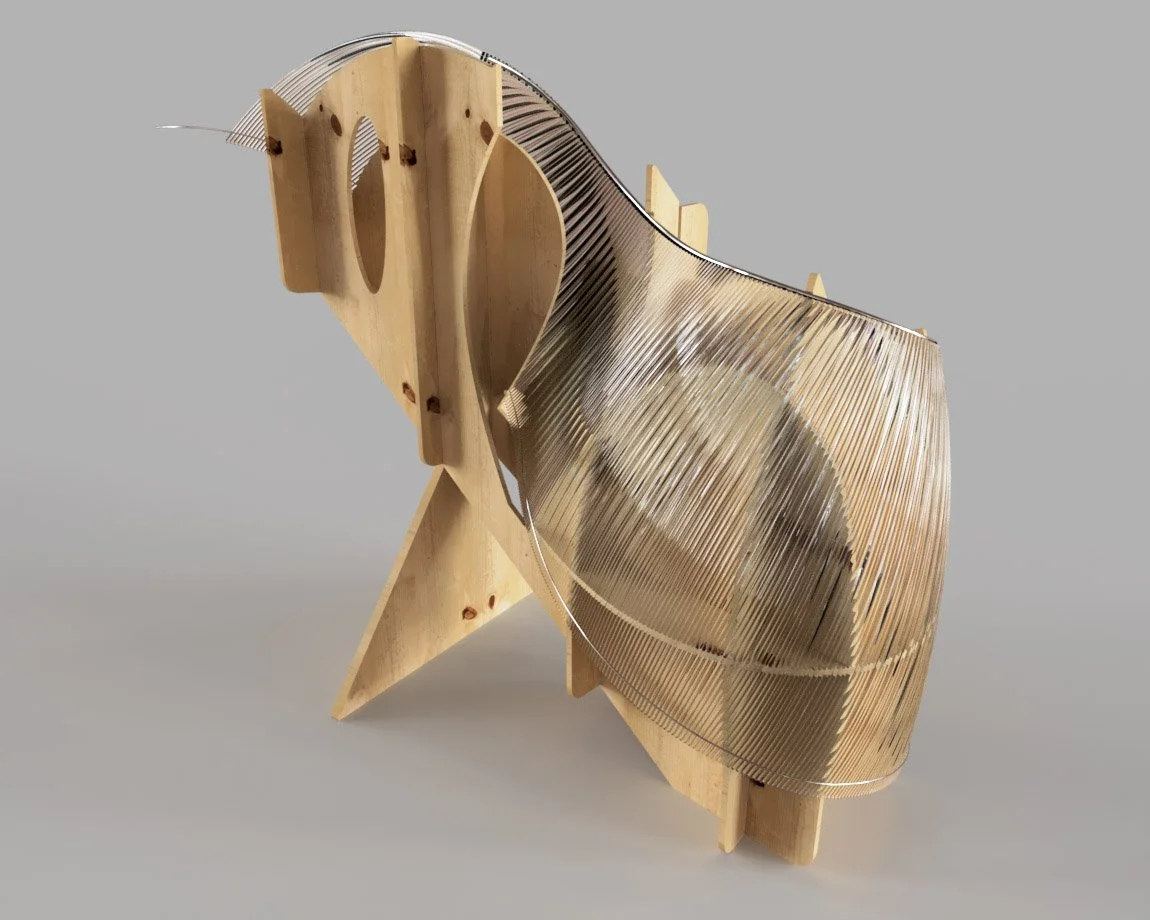
There is a principle in architecture called design-build — the idea that the architect should be the contractor, because they intuitively understand what they are building. When field conditions demand adjustment, they can see the long story: shift the window this way and you gain that view; shift it the other way and you lose it. A separate contractor would not have that appreciation, and could not correct on the fly with intention. We apply the same logic to sculpture and fabrication. When Jonah is machining something and suddenly realizes he could cut half the tooling time because he understands how the part functions in the design, that is intention, not just efficiency.
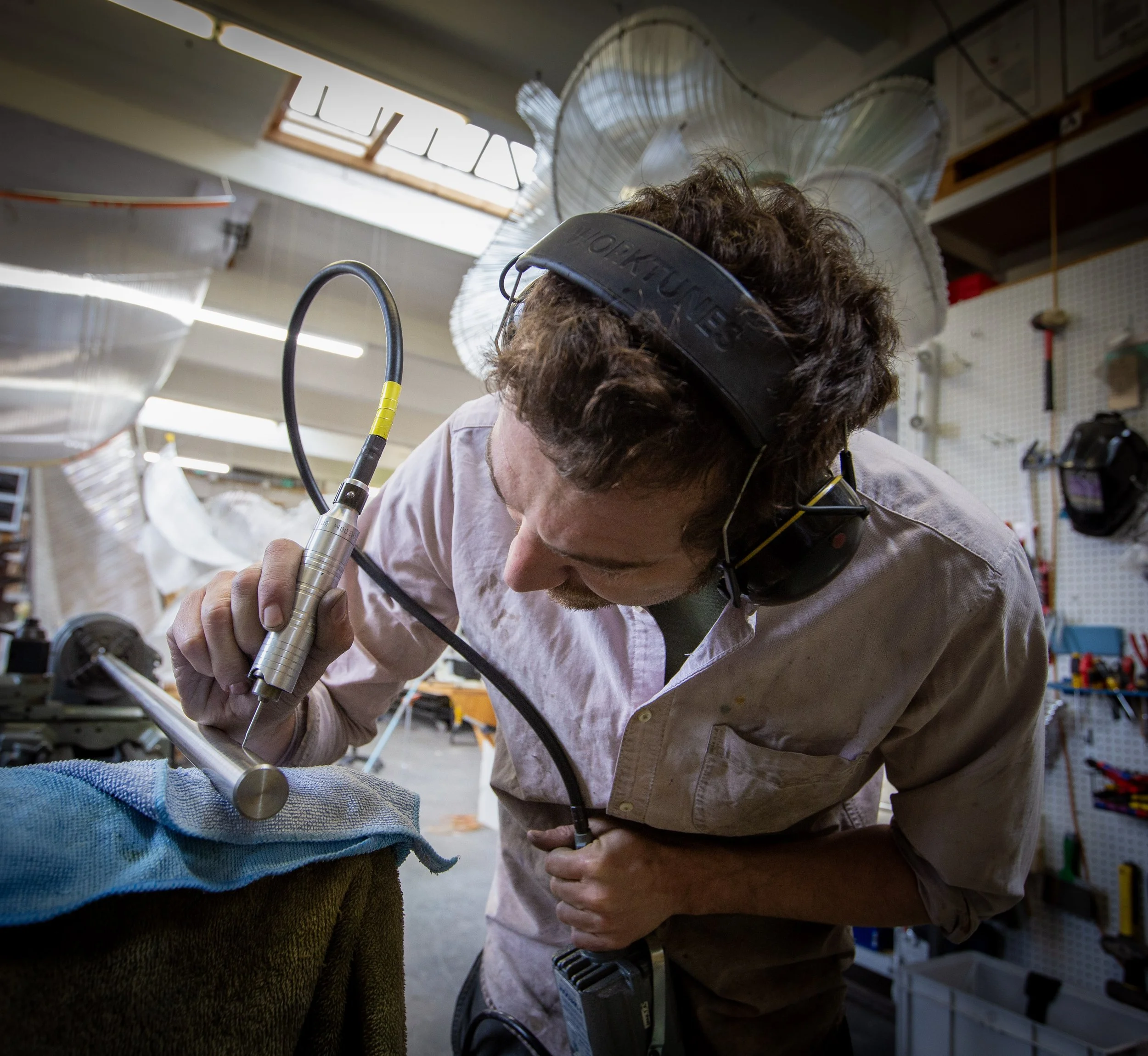
Machine Man Jonah B
Now, I am not arguing that everyone should do everything. We do not pretend to be engineers. But we have done enough destructive testing, enough conversation with Arup, enough hands-on testing that we intuitively understand what engineers are worried about — safety margins, unquantifiable aspects, how they vary by application. And when you are designing something and trying to figure out how to hang it, knowing how engineers think about that problem changes the conversation entirely.
Mangrove proved this. On site in Manila, we hit problems that needed instant solutions — custom wrenches that would not fit standard spaces, retrofit elbows for cable tension adjustment. Those fixes happened because the people solving the problem had been inside the design from the beginning. Could an engineering firm on the other side of the world have solved it? Maybe. But it would have required a familiarity with every aspect of the project that they simply could not have had.
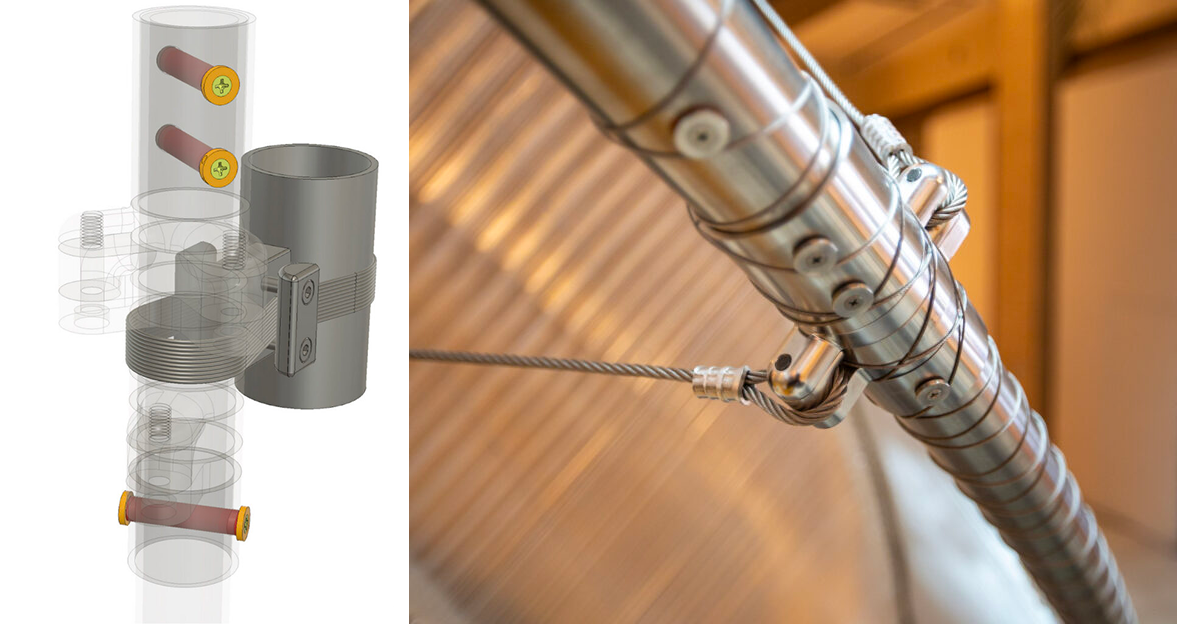
We believe in turnkey service — not because we are the best machinists or engineers or crate builders, but because that kind of fluency across disciplines reveals solutions that simply would not occur to anyone who only owned one part of the process.
But there's something deeper going on too. Toward the end of every fabrication arc, something shifts. You've finally cracked it — how to use the tools, how to adapt the methods, how to make the thing actually work. And right at that moment, that new facility opens your imagination. There's a posture to this kind of work, a constant lean forward, like a runner's stride. That's what technology has always meant to us — a continuously expanding set of questions that change not just what we build, but what we can conceive of building next.
Graham Dodd, who leads the advanced geometry group at Arup and has been our structural engineering partner for over twenty years, sometimes brings young engineers into our conversations about projects. He does it because they rarely get out from behind their desks into a place where someone might say, let me go machine that — or, we did destructive testing on a bunch of those, here is what we learned. That kind of physical intuition is hard to develop when the consequences of your calculations stay abstract. We know far less than they do about why things break. But we have spent enough time loading glass elements to failure — incrementally adding weight, waiting, and then weighing what it took — that we carry a strong physical sense of what might happen.
This is what the best collaborations look like: not parallel expertise running on separate tracks, but disciplines grafted together, each one strengthening what the other can do. It is not an argument for dabbling. Deep mastery still matters — you need engineers who understand physics at a profound level, and fabricators who have spent years inside their materials. But when you graft knowledge from adjacent disciplines onto that core mastery, you grow something that neither discipline alone could produce.
It turns out the engineering is where the poetry was hiding all along.